History of Medaka
A thousand years of quiet water.
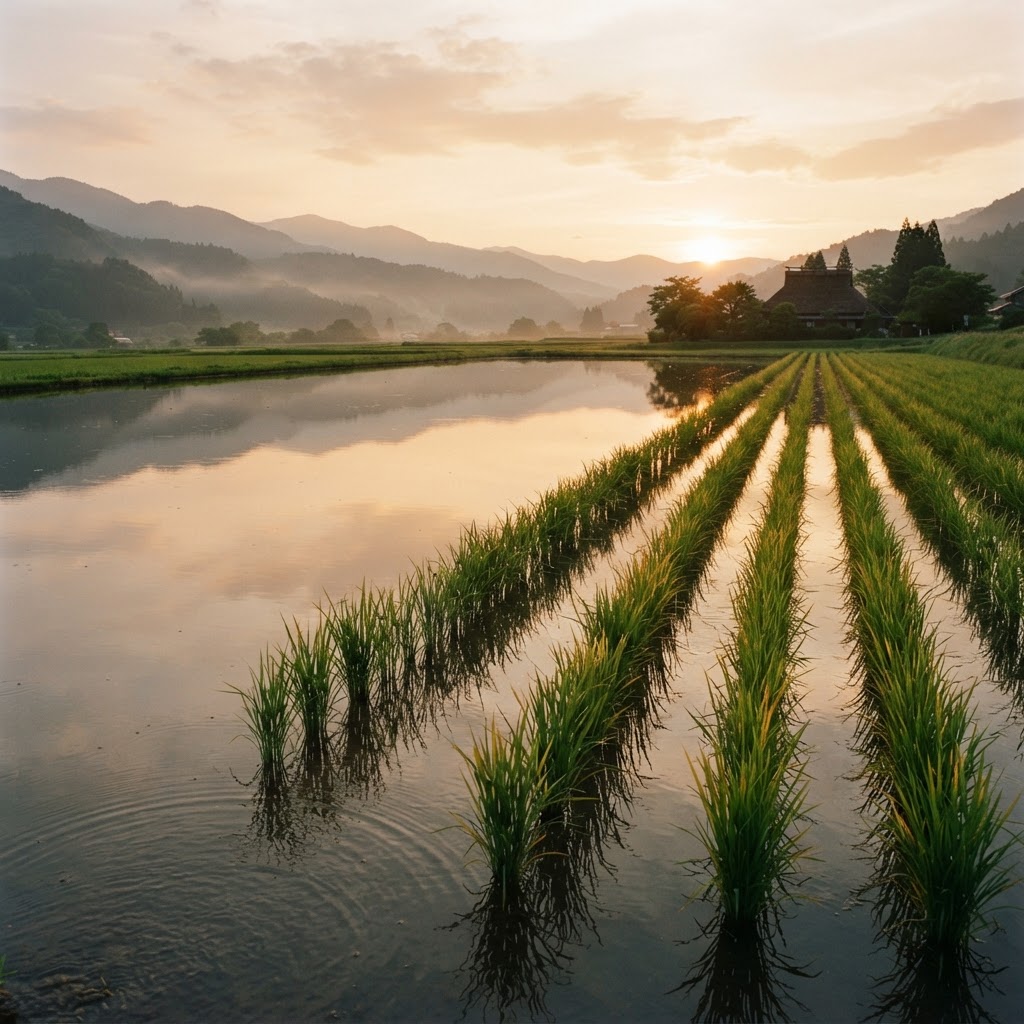
Long before the aquarium, there was the rice paddy. Each summer, as the monsoons filled the terraced fields of Japan, a small, shimmering fish rose among the green stalks — the medaka, 目高, the "high-eyed one." It was not a fish of grandeur. It was a fish of patience: humble, enduring, and quietly present in the daily life of a thousand villages.
In the poetry of Bashō and the prints of the Edo period, medaka appear as symbols of the ordinary and the overlooked — creatures that asked nothing, yet offered a glint of life to anyone who paused to look. They lived in stone basins, garden ponds, and the rain barrels of farmhouses. They were, in every sense, companions of the common home.
When Japan opened its doors in the Meiji era, the medaka became the first fish to swim in a glass aquarium on Japanese soil. In the century that followed, it would become a key to modern genetics — the first vertebrate whose sex chromosome was identified, a quiet contributor to our understanding of life itself. And in the ornamental renaissance of recent decades, dedicated breeders have cultivated hundreds of named strains, preserving lineage with the reverence once reserved for koi.
To keep a medaka is to inherit this long, gentle lineage. It is not a pet in the modern sense — it is a small, living thread connecting your desk to a flooded paddy, a stone basin, a woodblock print, a quiet poem. A thousand years of quiet water, held in a single bowl.
From rice paddy to teahouse.
Ancient Origins
Children of the Rice Paddy
Medaka (Oryzias latipes) have lived in the flooded rice paddies and shallow streams of East Asia for millennia. Their name — 目高, "high eye" — notes the upward tilt of their gaze, forever scanning the water's surface for insects and light.
Edo Period
Companions of the Common Home
During the Edo era, medaka became one of the most familiar fish in Japan. They appeared in woodblock prints, children's games, and the poetry of Bashō — small, humble creatures that lived alongside people in garden ponds and stone basins.
Meiji Modernity
The First Aquarium Fish
As Japan opened to the world, medaka became the first fish kept in a glass aquarium in the country. Their hardiness, small size, and gentle temperament made them the ideal entry into the new art of contained, living water.
Scientific Legacy
A Model for Life
Medaka became one of the most important model organisms in genetics and developmental biology — the first vertebrate to have its sex chromosome identified and a key to understanding how a single cell becomes a living being.
Ornamental Renaissance
The Art of the Strain
Dedicated breeders across Japan and the world began cultivating hundreds of named strains — from the luminous Platinum to the deep-bodied Wakasagi — preserving lineage standards with the same care once reserved for koi and goldfish.
The Teahouse
A Living Moment of Pause
At Medaka Teahouse, we carry this long lineage forward — not as specimens, but as companions for a daily practice of stillness. Each fish is a small, living thread connecting your desk to a thousand years of quiet water.